

What Software Engineering Actually Is
You write your first program, maybe something as small as printing "Hello, World" to a screen, and it works. It feels like magic, and for a second, it feels like you're already a software engineer. So what's actually left to learn?
A lot, but maybe not what you'd expect. This article isn't about a new tool or technique. It's about being honest with you, early, about what this job actually is, so everything else in this wiki makes a lot more sense as you go.
It's Not Really About Code
If you ask someone outside the field what a software engineer does, they'll probably say "writes code." That's true, but it's a bit like saying an architect's job is "draws lines." Technically correct, and missing almost everything that actually matters.
Writing code is the last step, not the main event. Before any code gets written, someone has to understand what problem is actually being solved, for who, and why. Someone has to figure out what could go wrong, what already exists that could be reused, and how this one piece fits into everything else already built. The code itself is usually the easy part, once all of that thinking has already happened.
Programming vs Engineering
Here's a distinction worth sitting with, since it explains a lot of what's coming later in this part. Programming is the act of writing instructions a computer can follow. Engineering is figuring out which instructions are worth writing in the first place, and building them in a way that still works, and still makes sense, months or years later.
Think of it like the difference between laying bricks and being the one who designed the building. A skilled bricklayer can lay a wall perfectly. But someone still had to decide where the walls go, how they'll hold the roof up, what happens when the ground shifts slightly, and how the plumber and electrician will fit their work in later without tearing anything down. Software engineering is that second job, done with code instead of bricks.
This is also why "learning a programming language" and "becoming a software engineer" aren't the same milestone, even though it's easy to confuse the two early on. The language is the bricklaying. Everything else in this part, decomposing problems, debugging, reading errors, working with a team, is the actual engineering.
The Core Loop Behind Almost Everything You'll Do
Nearly every task you'll ever work on, from a tiny bug fix to a brand new feature, moves through the same basic loop. Understand the actual problem. Break it into pieces small enough to actually solve. Write something that solves it. Check whether it really works. Fix what didn't.
That loop sounds simple written out like this, but each step is its own skill, and most of this part of the wiki is really just zooming into one step at a time. Problem decomposition is step two. Debugging and reading errors are steps four and five. You'll notice this loop again and again once you know to look for it, in a five-minute bug fix and in a six-month project alike.
Trade-offs Are the Actual Job
Here's something that surprises a lot of new engineers: there's rarely one single "correct" way to build something. Almost every decision is a trade-off, and picking well is a huge part of what makes someone good at this job.
Take the browser and server articles from the previous part. A server can send back a fully built HTML page, or just raw JSON data for the browser to assemble. Neither one is simply "the right way." One loads faster the first time, one feels snappier afterward, and the right choice depends entirely on what you're actually building. That kind of decision, weighing speed against simplicity, or flexibility against maintainability, happens constantly, at every single layer of the How Everything Works: From Hardware to App article we covered earlier.
Beginners often look for the one true best practice. Engineers learn to ask, "best for what, exactly, and at what cost?"
Code Is a Team Sport
Here's another thing worth knowing early: you'll rarely write code that only you will ever read. Someone else will need to fix your bug in six months. Someone else will review your changes before they even go live. Future you, after you've forgotten exactly why you wrote something a certain way, counts as "someone else" too.
That's part of why this part of the wiki spends real time on things like version control and writing clean, readable code. They're not extra, optional polish. They're how a piece of software stays workable when more than one person, or one point in time, is involved. Which, honestly, is almost always.
The Ground Keeps Shifting
One last honest thing worth saying: the tools you learn this year won't be the exact same tools in wide use in ten years. Languages rise and fall in popularity. Frameworks get replaced. New ways of doing things show up regularly.
This isn't something to worry about, it's just the nature of the field, and it's exactly why this wiki spends its very first part on how computers, networks, and browsers actually work underneath everything else. Frameworks change. The idea of a request and a response, of memory and storage, of a problem broken into smaller problems, doesn't. Learn the durable layer well, and picking up whatever new tool shows up next becomes a lot less intimidating.
Why This Matters
Understanding what this job actually is changes how you learn everything after this. You'll stop expecting every problem to have one clean right answer, and get used to balancing the pros and cons instead. You'll stop feeling behind because you don't know some new framework everyone's talking about, since you'll know that the framework isn't really the job, the thinking underneath it is.
And when you're debugging something at 2am, frustrated, feeling like you must be missing some secret everyone else already knows, remember this: you're not missing a secret. You're doing the actual job. The code was always the easy part.
Go Deeper
If this topic clicked for you and you want to see the real thinking behind the job laid out properly, these two are worth your time:
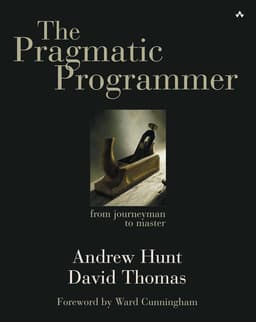
The Pragmatic Programmer. by David Thomas and Andrew Hunt
One of the most respected books in the field.
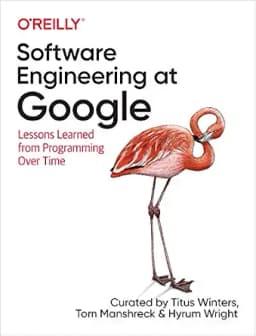
Software Engineering at Google
Written by engineers at Google.
- "The Pragmatic Programmer" by David Thomas and Andrew Hunt. One of the most respected books in the field, and for good reason. It's less about any specific language and more about the habits, trade-offs, and thinking that actually make someone effective at this job, much of what this article only had room to introduce.
- "Software Engineering at Google," free to read online. Written by engineers at Google about what engineering actually looks like at scale, with real focus on the difference between programming and engineering this article opened with, and why that difference matters more as a codebase and a team grow.
Start with "Software Engineering at Google" if you want a free, real-world look at how this plays out at scale. Pick up "The Pragmatic Programmer" once you're ready for the fuller, more personal version of the same lessons.